
Let the Light In
Why ETFE Transparency Changes Modern Roof Design
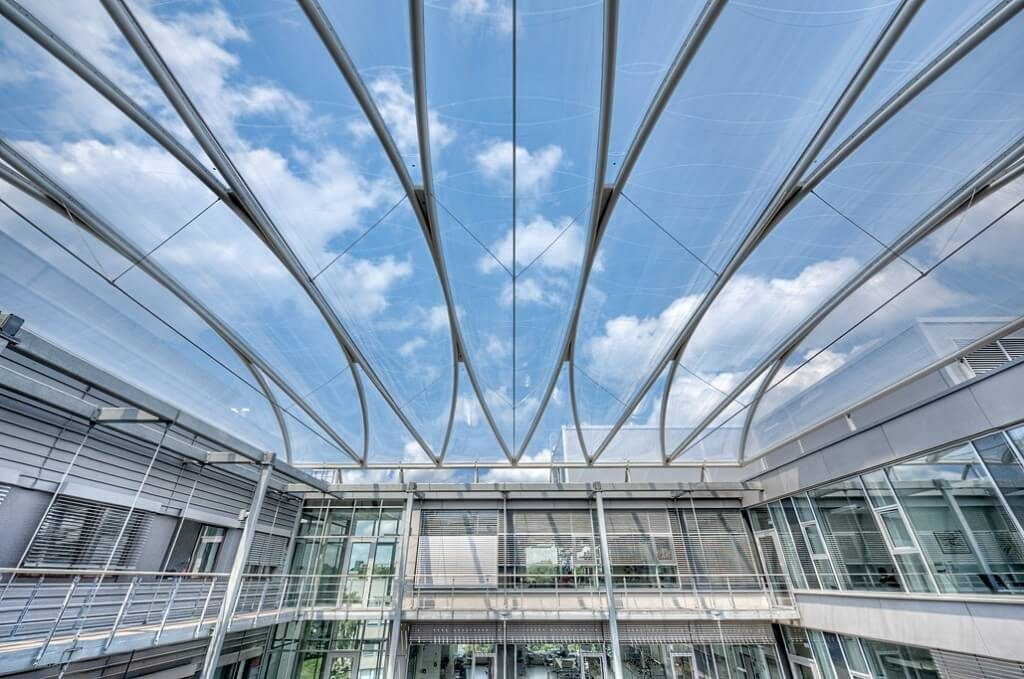
A clearer sky starts above you
Look up through a typical glass skylight and you’ll often notice the structure before the sky. Steel mullions divide the view into sections, casting shadows and interrupting the natural light. It works—but it never feels completely open.
This is where ETFE roofing systems change the experience.
ETFE (ethylene tetrafluoroethylene) film allows 94–97% of visible light to pass through with almost no distortion. There’s no noticeable tint, no layered reflections—just clean, natural daylight. The result is a space that feels brighter, softer, and more connected to the outdoors.
For building users, the difference is immediate. Interiors feel less enclosed, and the boundary between inside and outside becomes less defined. For architects and ETFE roof specialists, this level of transparency unlocks a new way to design light-filled spaces without heavy visual obstruction.
ETFE vs Glass: What really blocks your view?
Traditional glass roofing systems typically achieve 70–88% light transmission, depending on coatings and structural design. But the bigger limitation is not just the glass—it’s the support system.
Because glass is heavy, it requires framing support every 1.5 to 2.5 meters. These structural members—purlins and beams—break up the roof visually and reduce the sense of openness.
In contrast, ETFE cushions are lightweight and require far fewer structural supports. This means:
- Wider, uninterrupted spans
- Minimal framing lines
- A cleaner, more modern roof appearance
For any ETFE contractor or roofing specialist, this translates into both design and performance advantages that glass simply cannot match at scale.
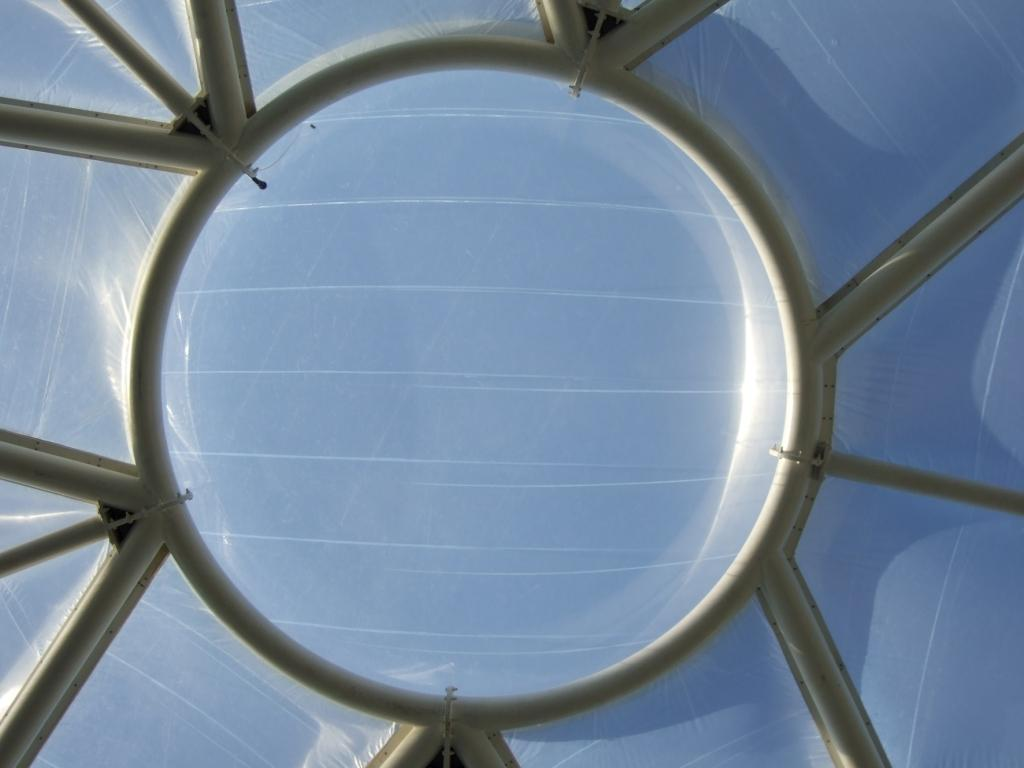
The physics behind ETFE roofing performance
The biggest technical difference between ETFE and glass comes down to weight.
- Glass roofing: 25–40 kg/m²
- ETFE cushion system: 0.3–1.0 kg/m²
This isn’t a small improvement—it’s a complete shift in material efficiency.
For engineers and developers, this means:
- Reduced structural steel requirements
- Lighter supporting frameworks
- Lower foundation loads
- More cost-efficient construction
For architects, it means the ability to design larger, more ambitious roof spans with fewer constraints.
Natural light quality matters
Not all daylight is equal. While both ETFE and glass allow light into a building, the quality of that light differs significantly.
ETFE is naturally neutral, meaning:
- No yellowing or color distortion
- Minimal light scattering
- Consistent daylight performance
This makes ETFE ideal for:
- Retail environments
- Exhibition spaces
- Commercial buildings
- Public venues
The human side of ETFE roofing
There’s more to roofing than structure and cost. The way a space feels matters.
When people can look up and see an uninterrupted sky:
- Spaces feel larger and more open
- Natural light improves comfort
- The environment feels less artificial
Research shows that access to daylight can improve mood, reduce stress, and support productivity. ETFE enhances these benefits by removing visual barriers and delivering a more natural lighting experience.
Glass skylights still perform well in many applications. But ETFE roofing creates a noticeably different environment—one that feels lighter, clearer, and more connected to nature.
Why ETFE is shaping the future of roofing
As architecture evolves, so do material choices. ETFE is becoming a preferred solution because it combines:
- High light transmission
- Lightweight structural performance
- Lower construction and maintenance costs
- Greater design flexibility
For developers, this means better project efficiency.
For architects, it means more creative freedom.
For contractors, it means faster and more adaptable installation.
That’s why more projects today are turning to ETFE roof specialists and contractors to deliver modern, high-performance roofing systems.
TE Membrane provide invaluable insights and solutions in the area of tensile fabric structure. Their experience ensures your project benefits from cost-effective, aesthetically pleasing, and structurally sound designs in tensile membrane manufacturing and completion of tensile membrane structure for roof and wall. Collaborate with them to expertly manage geometry selection, fabrication, and installation for a successful outcome ETFE membrane structure roof specialist.
This article is for educational and informational purposes only. All comparisons are based on general industry data and typical engineering assumptions and may vary depending on project design, location, and specifications.
All images used are royalty-free stock photographs sourced . They are used strictly for illustration and do not represent any real project, company, or construction work.