
The Green Angle
Environmental Impact & Sustainability from Factory to Recycling

Construction contributes close to 40% of global carbon emissions, and that impact begins long before a building is occupied. Every material decision—especially for the roof and facades—affects manufacturing energy, transport weight, installation effort, operational efficiency, and end-of-life waste.
An ETFE structure approaches this lifecycle differently from conventional glass. It is not just lighter—it simplifies each stage from factory to recycling. When used across large-span roof systems and continuous facades, the cumulative environmental benefit becomes substantial, measurable, and practical in real construction conditions.
ETFE Flim Manufacturing: Lower Energy, Smarter Material Use
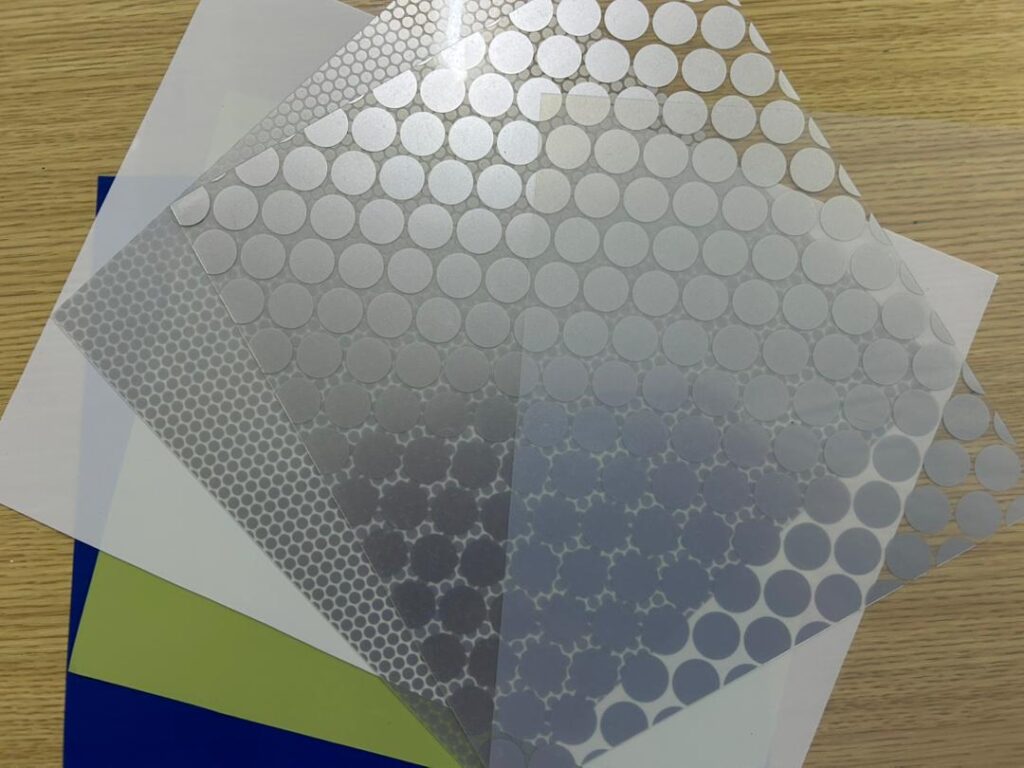
Glass production depends on extreme heat and continuous furnace operation, which locks in high energy consumption from the start. Every square meter of glass roof or facade carries this embedded carbon footprint.
An ETFE structure, by comparison, uses a fluoropolymer film that requires significantly less energy to produce. The material volume is drastically lower, and the process is more controlled and efficient.
Key impact differences:
- Glass requires high-temperature furnaces (~1700°C)
- ETFE production uses lower-energy polymer processing
- Material usage is reduced by over 90% for the same roof coverage
- Lower embodied carbon from day one
When scaled across large facades and long-span roof designs, the reduction in manufacturing energy becomes a defining sustainability advantage.
Transport & Logistics: ETFE Lightweight Means Low Carbon
Transport is often underestimated, but it plays a major role in real project emissions. Heavy materials multiply fuel use, handling complexity, and delivery cycles.
Glass systems:
- Heavy panels requiring rigid packaging
- Multiple truckloads for large roof areas
- Higher fuel consumption per delivery
- Increased risk and handling requirements
An ETFE structure changes the equation:
- Delivered in compact rolls or lightweight cushions
- Minimal packaging waste
- Fewer deliveries for large roof and facades
- Faster, simpler site logistics
For projects with extensive facades or stadium-scale roof coverage, this advantage compounds quickly.
ETFE Installation: Faster Build, Lower Environmental Load
Installation is another stage where sustainability is often overlooked. Time, machinery, and labor all contribute to the environmental footprint.
Glass installation typically involves:
- Heavy lifting equipment
- Stronger supporting structure
- Longer installation periods
- Higher on-site energy use
An ETFE structure offers a more efficient alternative:
- Lightweight framing systems
- Rapid cushion installation
- Reduced need for heavy machinery
- Shorter installation timelines
For large-span roof systems and continuous facades, installation efficiency directly translates into measurable sustainability gains.
ETFE Long-Term Performance: Durability Without Excess Maintenance in ETFE Structure
Sustainability is not only about initial carbon—it depends on how a material performs over time. Frequent repairs, cleaning, or replacement increase lifecycle impact.
An ETFE structure performs reliably across both roof and facades applications:
- Service life of 25–35+ years
- High resistance to UV degradation
- Self-cleaning surface reduces maintenance
- Stable performance under varying climates
Glass systems, while durable, introduce ongoing requirements:
- Regular cleaning systems
- Sealant and gasket replacement
- Higher structural stress over time
Long-term advantage of ETFE Roof and Facade:
- Reduced maintenance cycles
- Lower operational energy
- Consistent daylight performance in facades and roof systems
Over decades, these small reductions accumulate into significant environmental savings.
ETFE Recycling & End-of-Life: Closing the Loop
One of the strongest sustainability advantages of an ETFE structure is its realistic and functioning recycling pathway. Unlike many materials that are “technically recyclable,” ETFE is actively recovered and reused.
ETFE recycling process:
- Cushions from roof and facades are removed at end-of-life
- Material is collected and returned to the manufacturer
- ETFE film is cleaned and reprocessed
- Reused in new ETFE products or industrial applications
Manufacturer take-back programs:
- Many suppliers accept used ETFE material
- Structured recovery systems reduce landfill waste
- Material retains value, making recycling viable
This creates a practical circular system, especially for large-scale roof and facade installations.
Glass Disposal: Complex and Often Wasteful
Although glass is recyclable in theory, real construction systems are rarely simple.
Typical challenges:
- Laminated layers bonded together
- Coatings that complicate separation
- Mixed materials (frames, sealants, fixings)
- High cost of dismantling and sorting
Result:
- Significant portions end up in landfill
- Limited recovery of full system materials
Compared to an ETFE structure, the end-of-life process for glass is less efficient and less predictable.
Lifecycle Environmental Comparison (Simplified)
ETFE structure (roof & facades):
- Low manufacturing energy
- Minimal transport emissions
- Fast, efficient installation
- Low maintenance requirements
- Fully recyclable with take-back systems
Glass systems (roof & facades):
- High energy production
- Heavy transport footprint
- Slower, resource-intensive installation
- Ongoing maintenance load
- Complex disposal process
TE Membrane provide invaluable insights and solutions in the area of full design & engineering in tensile fabric structure. Their experience ensures your project benefits from cost-effective, aesthetically pleasing, and structurally sound designs in tensile membrane manufacturing and completion of tensile membrane structure for roof and wall. Collaborate with them to expertly manage geometry selection, fabrication, and installation for a successful outcome ETFE membrane structures roof and ETFE facade specialist.
This article is for educational and informational purposes only. All comparisons are based on general industry data and typical engineering assumptions and may vary depending on project design, location, and specifications.
All images are used strictly for illustration and do not represent any real project, company, or construction work of freenaturestock.